

Chapter 12: Cicadas
March 19-25, 2026

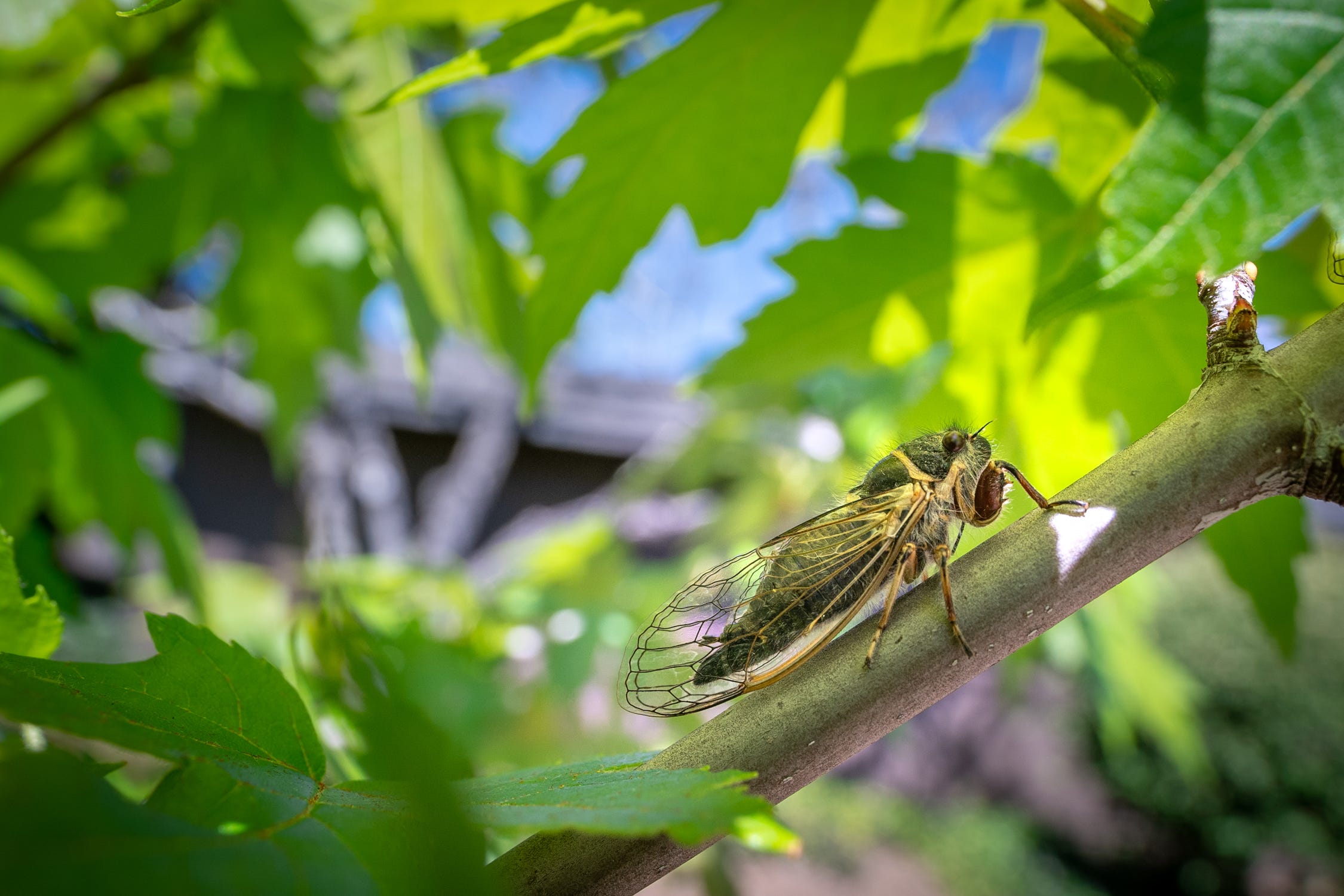
Platypedia similis, a “wing-tapping” cicada that produces a distinctive clicking sound, is one of 18 or 19 cicada species in three genera native to the Bay Area. Credit: Elliott Smeds
Did you hear it? I did on March 14, at the start of this long, unseasonal heat wave: cicadas, clicking away from unseen places in my yard. The first cicadas of the year, coaxed by warm temperatures from their subterranean hideouts. And they’ve been going ever since, all week, all over town. It’s early for this surefire audible cue that spring is here, but not unheard of.
How do I know that? A couple years ago I spoke with Sonoma State University entomologist Elliott Smeds for an article in Sonoma magazine. (“I mean, you could you could refer to me as an expert on California cicadas,” he said. “There are only about three people who study them. And I’m one of those three.”) Smeds told me that ‘round here, cicadas can be heard chirping as early as March and as late as August, with a peak around early June.
Rising temperatures not only spur cicadas from the soil, where they spend most of their lives as nymphs feeding on plant roots, but also support their noisemaking. “The act of singing requires a fair amount of metabolic energy,” Smeds said. “They’re using warm temperatures to heat themselves up so that their muscles can move fast enough to generate the sound.”
The males, that is. They’re the noisy ones. And as you probably already assumed, they’re doing to it attract the attention of females. After mating, males will try again, while females will lay eggs in trees or shrubs. Soon both will die. The babies will hatch, drop from their branch, crawl back underground to suck on root sap for five to seven years or more, emerge as mature nymphs when conditions are right, molt into adults, then start the cycle anew.
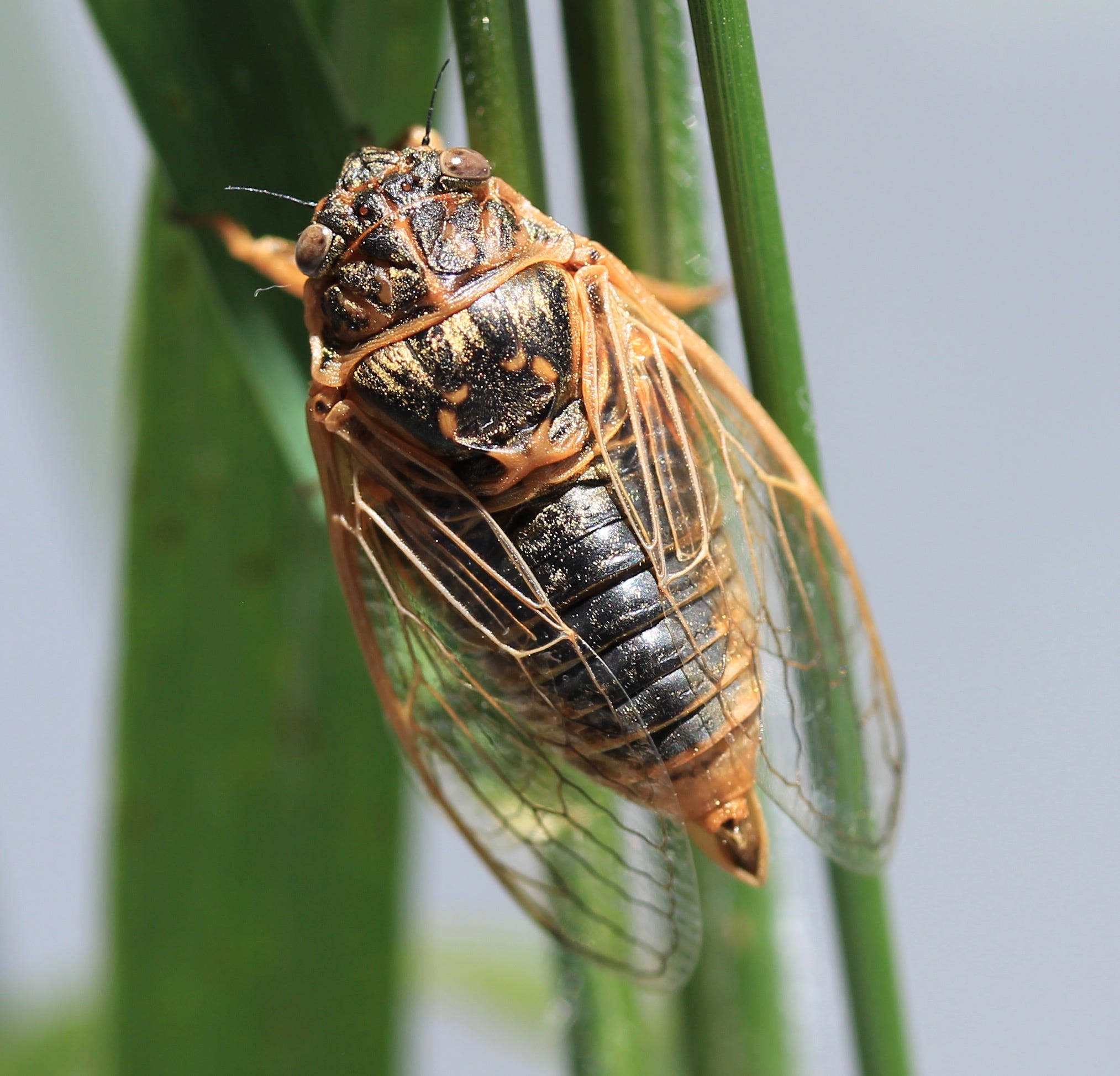
Okanagana triangulata, sometimes called a “whip cicada,” produces sound using a pair of organs on its abdomen known as timbals. Credit: Elliott Smeds
The Bay Area has perhaps 18 native species of cicadas in three genera that occupy a range of habitats from the coast to the interior mountains, Smeds said. (And by the way, they’re all basically harmless, unlike the locusts with which they are sometimes confused.) Platypedia, or "wing-tapping” cicadas, are unique among all cicadas because they sing entirely through striking their wings against the branches they're perched on. These are the ones I hear most often in my corner of Sonoma County; their call sounds like a ratchet, with short bursts of rapid clicks, or sometimes a series of individual clicks. Our local Okanagana and Tibicinoides species, meanwhile, like all other cicadas, produce sound using a pair of organs on their abdomens called timbals that flex in and out via muscle contraction dozens or even hundreds of times a second, producing what humans hear as a sustained, high-pitched whine or buzz.
To me, wing-tapping cicadas sound like summer — even in the middle of March. But many people don’t even know we have cicadas here in the Bay Area. Perhaps that’s because they’re not as big and noisy as the annual “dog-day” cicadas back east. Or perhaps it’s because our cicadas don’t pull silly stunts like the periodical species that emerge only once every 13 or 17 years (sometimes in the same year). In any case, Bay Area cicadas deserve our ear. Listen up.
Recommended outings:
I like highlighting wildlife and natural phenomena that all of us can experience in our own yards, neighborhoods, and local parks. This is another of those that you may encounter just about anywhere with a modicum of habitat: trees, shrubs, long grass. And the cool thing is, you don’t even have to see them to appreciate them. Though if you do a get a chance, they’re pretty neat up close, too, whether a live adult or an empty carapace left behind by a molting nymph.
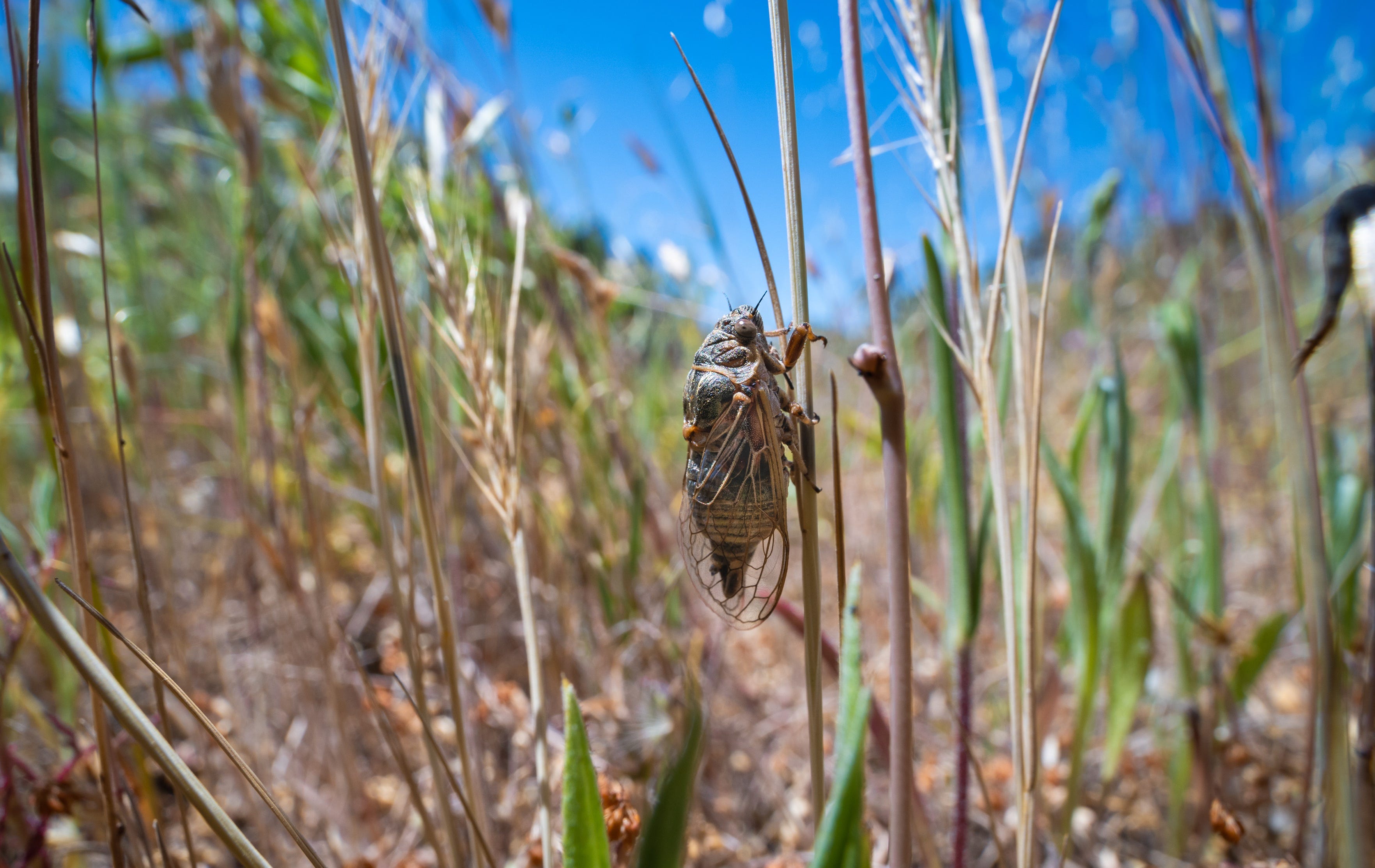
Tibicinoides minuta on a stalk of grass. Credit: Elliott Smeds